


Many people turn to medical treatments for weight loss after hitting a plateau with diet and exercise. For some, it’s about managing a chronic condition. For others, it’s frustration after years of effort without lasting results.
Prescription medications can offer another way forward when traditional approaches fall short.
While Semaglutide—the active ingredient in Wegovy and Ozempic—remains highly effective, Tirzepatide (in Zepbound and Mounjaro) has shown even greater average weight loss in clinical trials, making it a leading option today. Still, it’s not the only choice out there.
This article takes a closer look at why these top medications stand out, how they compare, and what to consider when choosing the right treatment.

When doctors and researchers discuss top weight loss medications, Semaglutide and Tirzepatide (both GLP-1 receptor agonists, with Tirzepatide also targeting GIP) frequently top the list due to strong clinical results.
Semaglutide comes in different forms:
People who took Semaglutide in clinical trials lost, on average, around 15% of their body weight over about a year, according to large clinical studies of Wegovy in people with obesity. Tirzepatide has demonstrated up to about 22% average weight loss in similar timelines, according to clinical trials of Zepbound/Mounjaro in adults with overweight or obesity. That said, results depend on sticking with the treatment and pairing it with healthy changes in diet and activity.
How they support weight loss:
They’re taken as weekly injections, with doses slowly increased over the first few months to help your body adjust and reduce side effects.
While they’re not for everyone, Semaglutide and Tirzepatide are currently among the most successful medications available for long-term weight loss—especially when used as part of a broader treatment plan.
Related Article: What’s the Most Effective Weight Loss Injection?
Semaglutide and Tirzepatide lead in terms of results, but they’re not the only options. Depending on your health history, goals, and insurance coverage, your provider may recommend something else—or a different medication might work better for your body.
Here are a few medications doctors often consider for weight loss:
One of the oldest weight loss medications on the market. It’s a stimulant that helps suppress appetite. Because of its effects on blood pressure and heart rate, it’s typically used for short-term weight loss, often over a few months.
This is a combination medication that targets areas of the brain involved in hunger and cravings. It’s sometimes a good choice for people who also struggle with emotional or binge eating.
This drug works in your digestive tract to block fat absorption. It tends to produce more modest weight loss and often comes with gastrointestinal side effects, so it’s less commonly used now.
Each of these options has its own benefits and trade-offs, and decisions about which to use often come down to individual medical history and how your body responds.
Weight loss medications are usually recommended for people with a BMI of 30 or higher, or 27 or higher if there’s a related health condition like high blood pressure or type 2 diabetes.
Before starting any weight loss drug, your provider will review your:
It’s not just about the number on the scale. The goal is to find a treatment that’s safe, sustainable, and fits into your life.
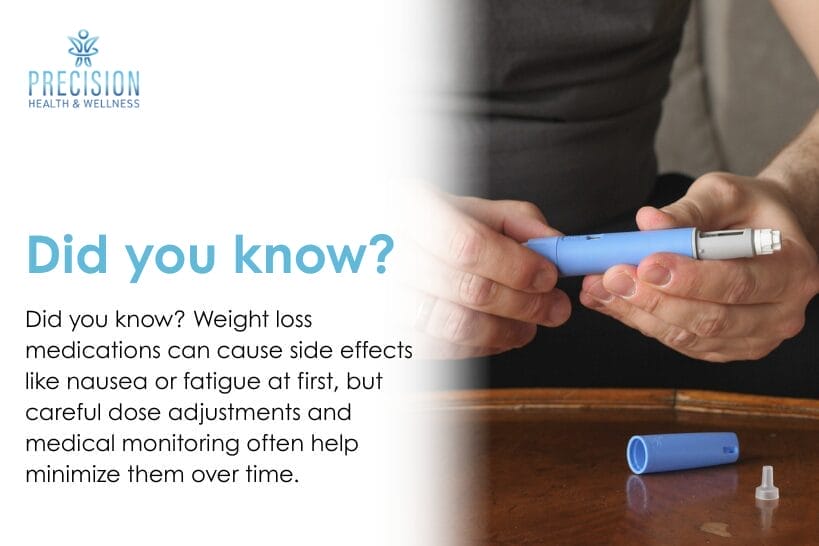
Every medication comes with potential side effects, and weight loss drugs are no different. What you experience can vary depending on the drug and your own body.
The most common side effects with Semaglutide and Tirzepatide include:
These usually get better over time, especially as the dose is adjusted slowly. More serious but less common risks include pancreatitis or gallbladder issues.
For drugs like Phentermine, side effects may include:
Naltrexone-Bupropion can cause mood changes or dizziness in some people, while Orlistat is known for causing oily stools and urgent bowel movements.
No matter which medication you use, your provider will monitor for side effects and help manage any concerns that arise.
Medication can be a powerful support tool for weight loss, but it’s not intended to work on its own. It should always be combined with lifestyle changes that focus on long-term health.
A complete medical weight loss program typically includes:
Many people benefit from being part of a structured program at a med spa or weight management clinic, where they have access to professionals who can tailor support based on their needs and progress.
Related Article: 12 Reasons to Choose Medical Weight Loss
So, what is the most successful medication for weight loss? Right now, Tirzepatide (especially Zepbound) edges out as a top performer based on clinical trial data, though Semaglutide remains highly effective. Their ability to reduce hunger, improve satiety, and support steady, significant weight loss has made them a go-to option for medical providers.
That said, it’s not one-size-fits-all. Whether Tirzepatide, Semaglutide, or another medication is the best fit depends on your health, your goals, and your body’s unique response.
If you’re considering a medical approach to weight loss, speak with a professional who can guide you through your options. With the right plan—and the right care—long-term success is possible.


